Showing posts with label Economy. Show all posts

Saturday, 16 November 2024

Vajpayee's Role in Economy of India during his Tenure

The Economic State During Atal Bihari Vajpayee's Prime Ministership

Atal Bihari Vajpayee, one of India’s most revered leaders, served as the Prime Minister of India across three terms, with his most significant tenure spanning from 1998 to 2004. During this period, India underwent transformative changes, particularly in the economic sphere. Vajpayee’s leadership was marked by liberalization efforts, infrastructural development, and resilience in the face of economic challenges.

Economic Reforms and Liberalization

Vajpayee's government continued the economic liberalization policies initiated in the early 1990s. While his predecessors laid the groundwork, Vajpayee's tenure focused on sustaining and broadening these reforms. His government implemented policies to open up various sectors, including telecommunications, insurance, and information technology, to private and foreign investment.

The introduction of the New Telecom Policy in 1999 marked a significant milestone, ensuring affordability and accessibility of mobile telephony. This policy laid the foundation for the telecom revolution in India, enabling widespread mobile penetration that would later transform the economy.

Infrastructural Development

One of Vajpayee’s most notable contributions was his emphasis on infrastructure development. The Golden Quadrilateral Project, launched under the National Highways Development Project (NHDP), was a flagship initiative aimed at connecting India’s four major metropolitan cities—Delhi, Mumbai, Chennai, and Kolkata—through a network of highways. This ambitious project not only improved connectivity but also boosted trade and economic integration across states.

The Pradhan Mantri Gram Sadak Yojana (PMGSY) was another transformative initiative focusing on rural infrastructure by improving road connectivity to villages. These projects had long-term implications for rural development, market access, and poverty alleviation.

Economic Resilience

Vajpayee’s tenure saw the Indian economy navigating several challenges. The Asian financial crisis (1997-1998) had created a ripple effect across emerging markets. India, however, managed to maintain macroeconomic stability, thanks to prudent fiscal policies and structural reforms.

In 1998, the country faced international sanctions following its nuclear tests in Pokhran. Despite these sanctions, India demonstrated economic resilience. Vajpayee’s leadership ensured minimal disruption to economic growth by diversifying trade relationships and bolstering domestic industries.

Focus on Disinvestment and Fiscal Discipline

The Vajpayee government also focused on reducing the fiscal deficit and improving efficiency in public sector enterprises. The creation of the Department of Disinvestment marked a significant step in privatizing loss-making public sector undertakings (PSUs). Companies like VSNL, BALCO, and Maruti Udyog Ltd. saw disinvestment during this period, which generated revenue and encouraged a more competitive market environment.

IT and Technological Advancement

Under Vajpayee’s administration, the IT sector emerged as a major growth driver. Policies promoting the software industry and investments in IT parks boosted India’s global reputation as an outsourcing hub. This period saw the rise of major IT firms and a surge in employment opportunities, particularly for the youth.

Challenges and Criticisms

While the Vajpayee government achieved considerable economic progress, it faced criticism on several fronts. The agricultural sector, which employed a significant portion of the population, lagged behind in growth. Droughts and declining farm incomes during his tenure highlighted the need for deeper agricultural reforms.

Additionally, the push for disinvestment faced opposition, with critics arguing it led to undervaluation of assets and job losses in certain sectors.

Legacy

Atal Bihari Vajpayee’s tenure left an indelible mark on India’s economic trajectory. His policies emphasized sustainable growth, infrastructure, and technological advancement, setting the stage for India’s emergence as a global economic player.

Vajpayee’s balanced approach to liberalization, commitment to infrastructure, and focus on fiscal discipline ensured that the Indian economy not only survived global challenges but also laid the groundwork for long-term development. His leadership remains a testament to how visionary governance can drive transformative change in a nation.

Wednesday, 13 March 2024

Role of Mughal Empire in Indian Economy


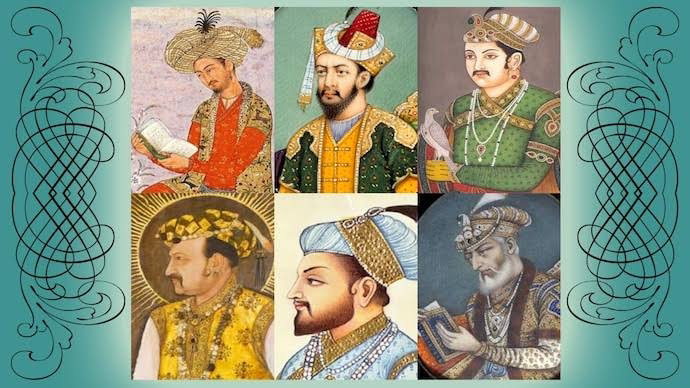
The Mughal Empire played a significant role in shaping the Indian economy during its reign from the early 16th to the mid-19th century. Some key contributions include:

1. **Agricultural Development**: The Mughals implemented various agrarian reforms, including the introduction of cash crops like cotton and indigo, as well as improved irrigation systems, which boosted agricultural productivity.

2. **Trade and Commerce**: The Mughal Empire facilitated trade and commerce by establishing a network of roads and promoting the use of standardized currency. Cities like Delhi, Agra, and Lahore became important centers of trade, attracting merchants from around the world.

3. **Artisanal and Industrial Growth**: Mughal patronage of artisans and craftsmen led to the development of industries such as textiles, metallurgy, and ceramics. The empire's support for skilled artisans resulted in the production of high-quality goods that were traded both domestically and internationally.

4. **Revenue System**: The Mughals implemented a sophisticated revenue system based on the land tax known as the zabt. While it helped in revenue collection, it also provided stability to the agricultural sector.

5. **Integration of Regional Economies**: The Mughal Empire brought together diverse regions under a centralized authority, facilitating the exchange of goods and ideas across the subcontinent. This integration contributed to economic growth and cultural exchange.

Overall, the Mughal Empire played a crucial role in fostering economic prosperity and development in the Indian subcontinent, leaving a lasting impact on its economy even after its decline.

Wednesday, 31 March 2021

Exploring the Economic Condition of India

Every country's economy has suffered a lot of damage due to lockdown. India had been badly hit as a result of the strict lockdown. It had been a year since March 2020 when COVID hit India. We have witnessed a lot of things in the last year: how the country handled COVID during its peak graph, how the frontline COVID warriors took care of patients, Indian health care system working 24x7 to take care of COVID cases. The last few months, when the COVID cases fell down, it really brought a smile to a lot of people. The end of lockdown jump-started the long-stagnant economy to an initial start & the launch of the vaccination drive shot up economic activities as people were waiting eagerly for normal days to return. Investors are regaining faith in putting their money out in the market. Even though this doesn't ensure that our country's economy has risen from the negative growth after the worldwide pandemic, but it sure does mark a start towards a recovery journey of the Indian economy. But, the current scenario comes with the cost of a lot of cost-cutting by the companies, resulting in unemployment evenly distributed throughout the country.
We can hope that with time the shape of the Indian economy will get better, but one cannot guarantee unless we can deal with the COVID pandemic first. The government is trying its best to broaden the vaccination umbrella to the citizens by trying to increase the age group eligible for vaccination. It is really impressive how the Serum Institute of India & Bharat Biotech is constantly pushing themselves to produce the vaccine for the welfare of the citizens.
RBI can take lead over here and make some changes in the rates so that people start to move their money and the market re-opens from being stagnant to a fluidic state. The central bank can provide a shoulder to rely upon the rates for businesses which are in dire need of money and are unable to pay their mortgages. Sectors like automobile, low-income group businesses are hit the worst.
Other factors like privatising the government entities and bringing in money is similar to killing the golden duck for the gold. Yes, perhaps it will provide initial relief, but the long term benefit will go missing. It perhaps will be a good call to make the government and private sector go hand-in-hand and learn to function together. India's economy largely depends upon agriculture. Hence the rural economy should also be the focal point.
The automobile industry took a severe hit during the COVID. But, it was seen that there has been a sharp rise in automobiles post COVID. Our government has taken several steps to ensure the rise of the automobile sector. The new scrappage policy that says after 15years commercial vehicles & 20years commercial vehicles needs to be scrapped will boost the selling of new cars. It will ensure that customers keep on buying products. In this manner the flow of money will continue, thus securing the upliftment of the current economic scenario. This will also open a pathway for the entry of EVs given that options are available for purchase and sufficient charging stations are made available.
These few tweaks and treats can really help the economy. Its high time that we act otherwise it is like a sinking ship that won't stop unless we make it stop.